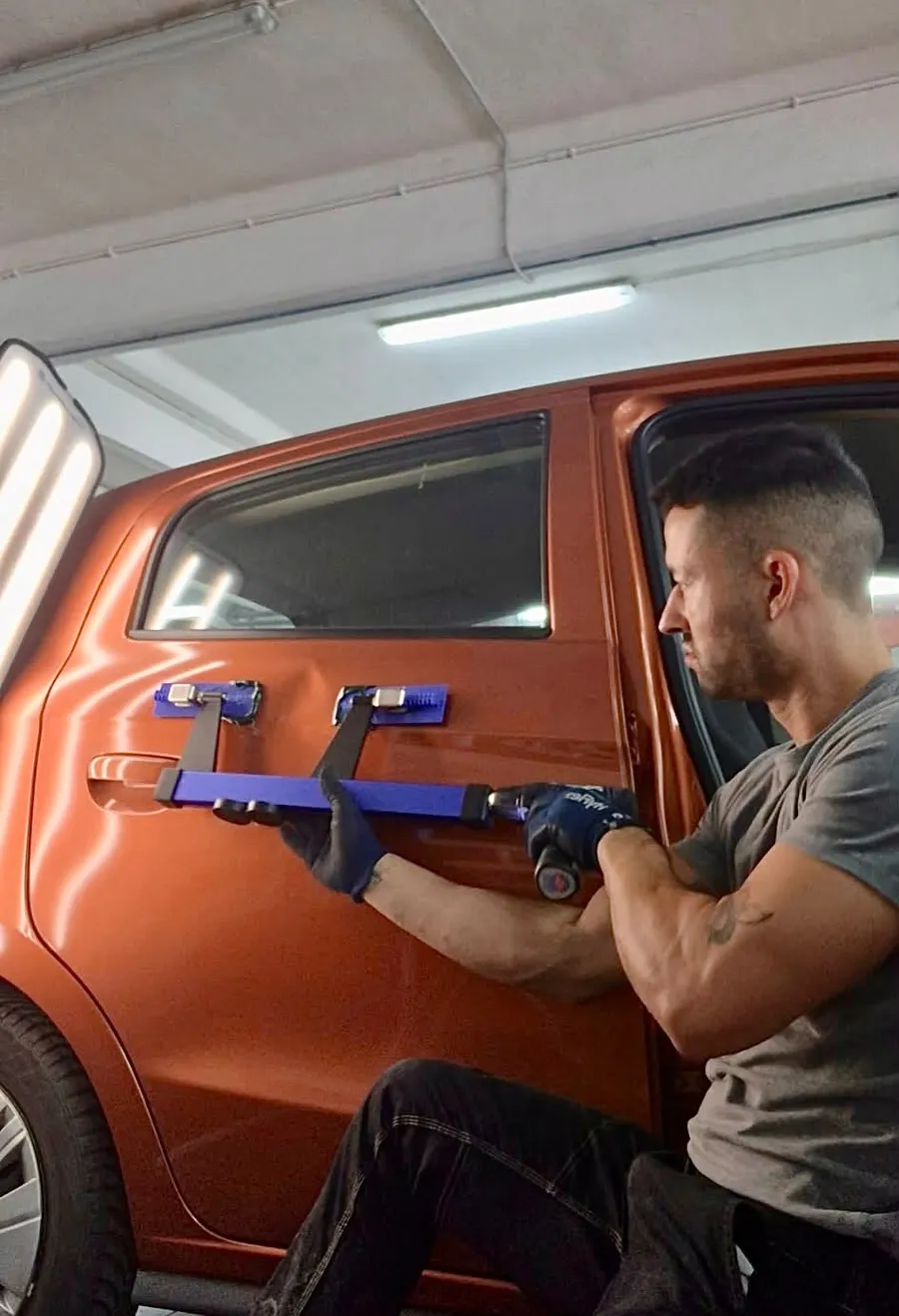
Your vehicle’s factory paint is priceless: our goal is to preserve it.
PDR is an innovative method that repairs damage and dents without resorting to expensive and invasive repainting.
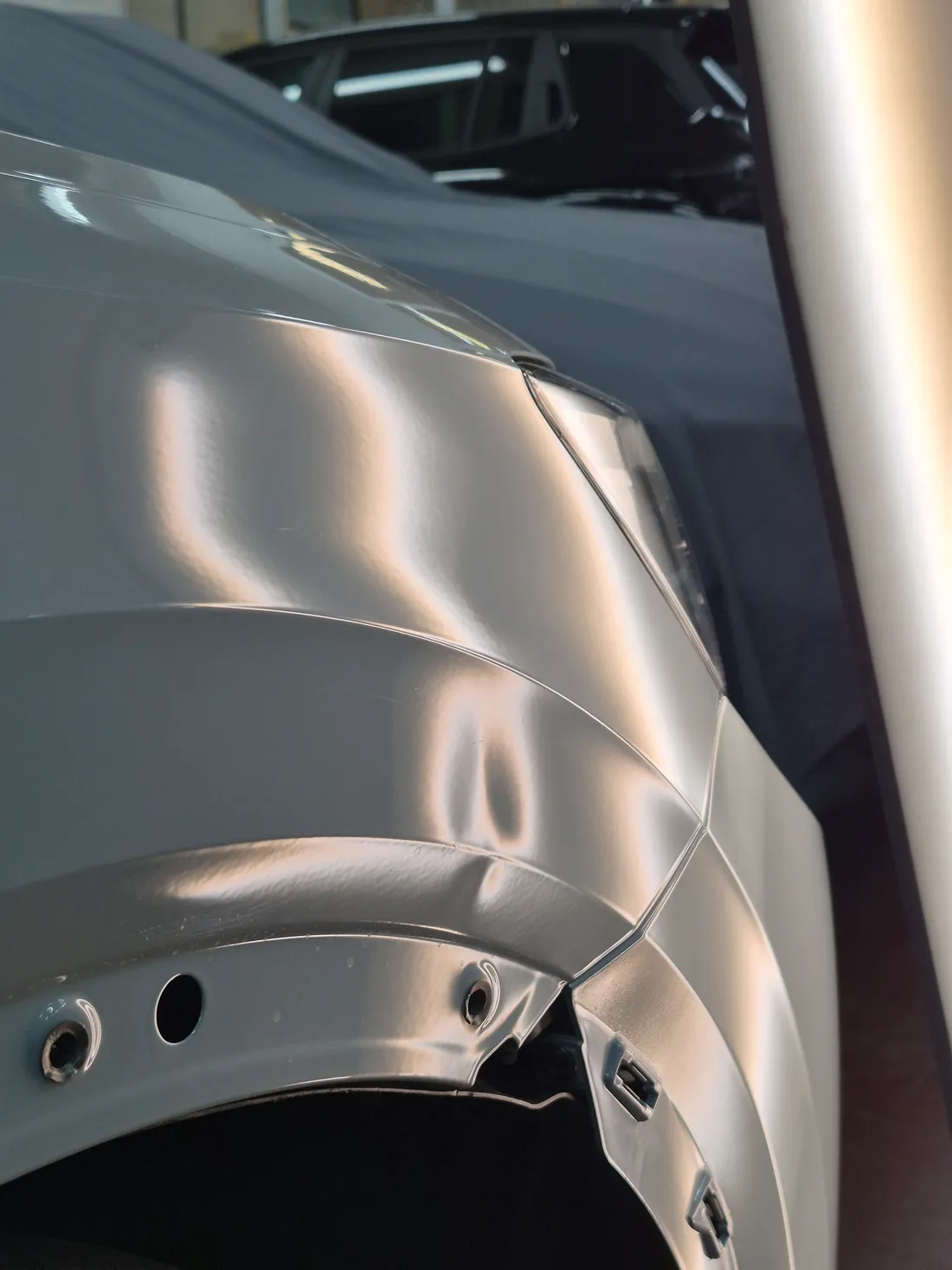
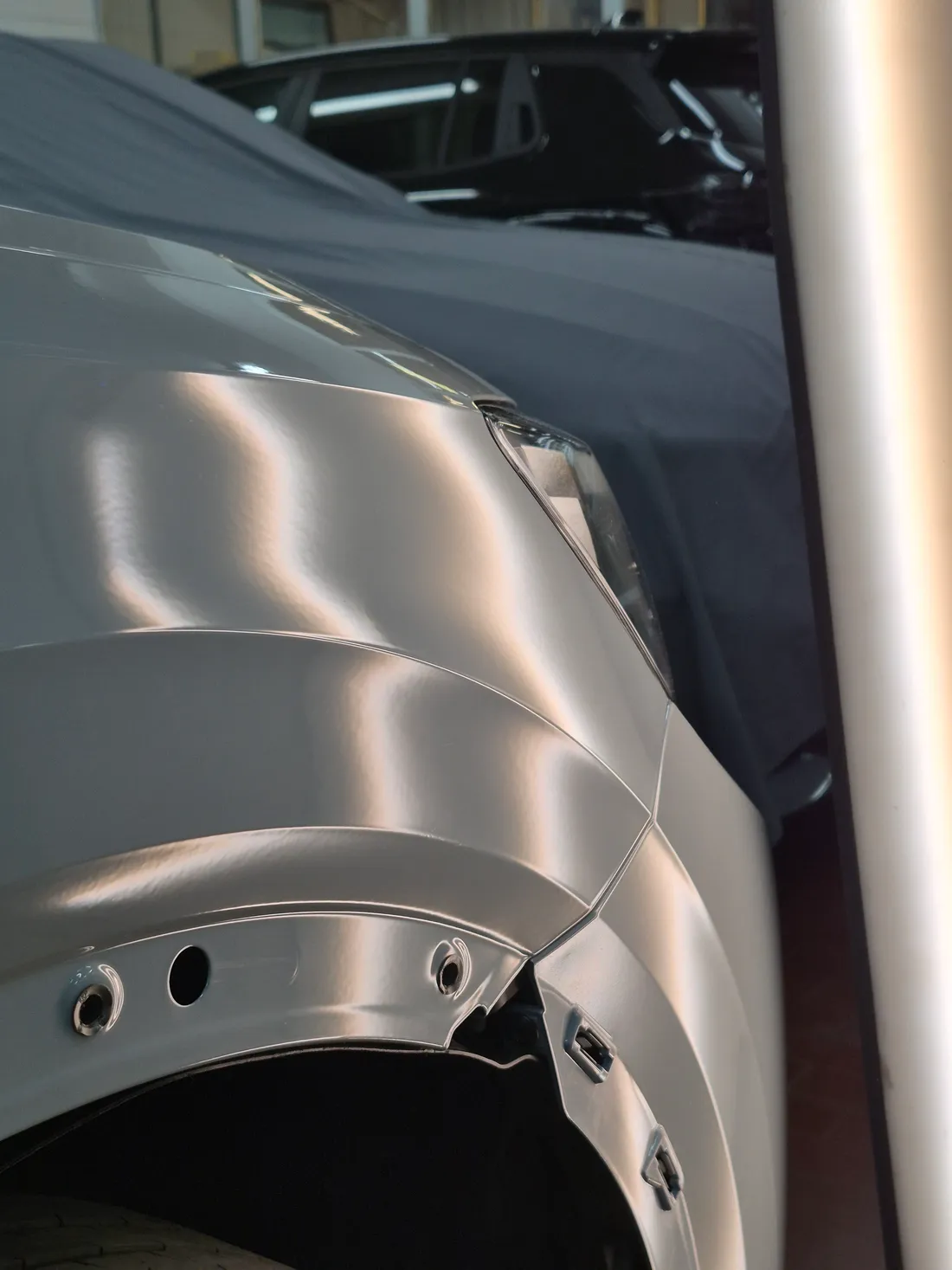
BeforeAfter
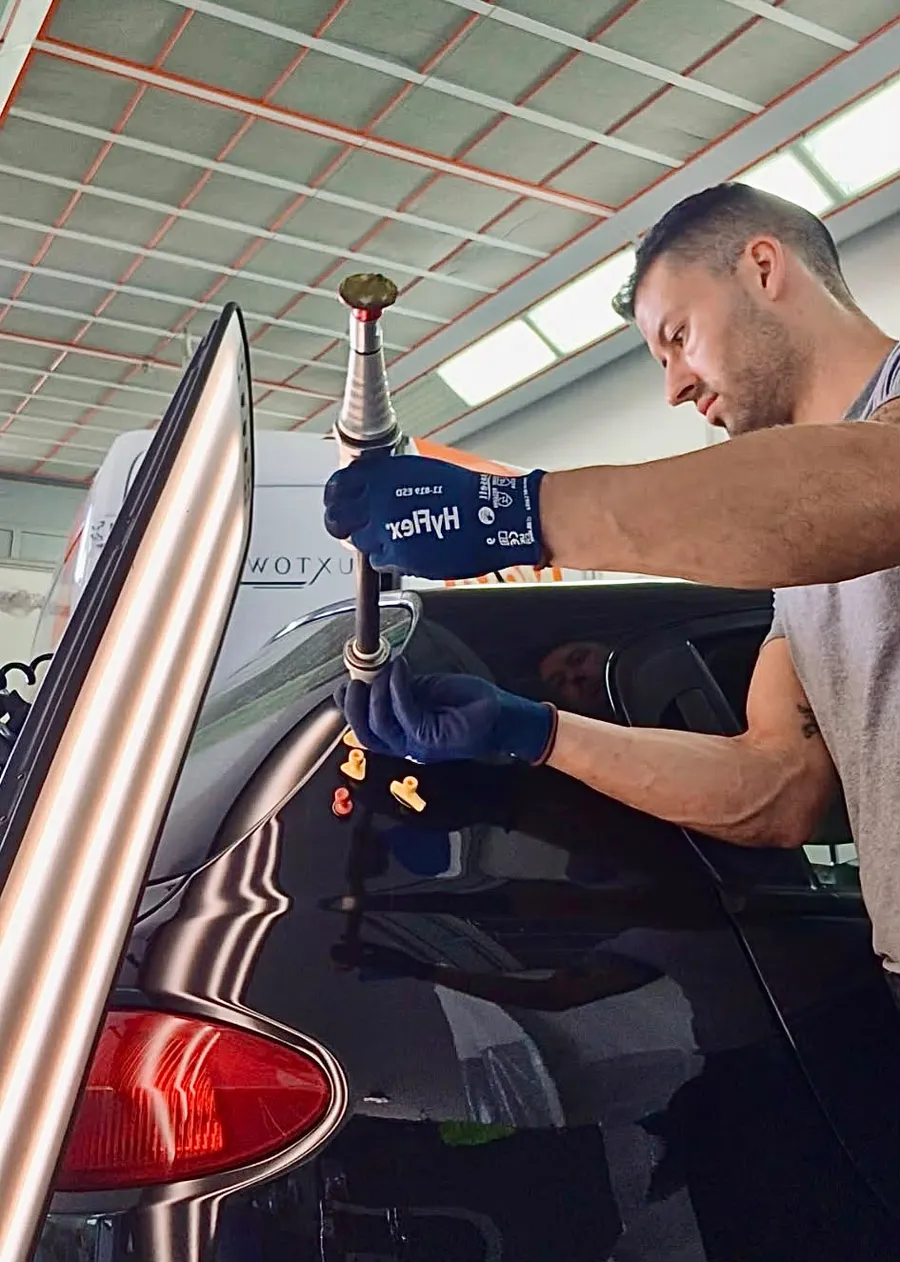
The lamp lines: bent by the dent, then straight again
How does it work?
Using specialized equipment, we work on the damaged panel with millimetric precision.
The process
By applying calibrated pressure at strategic points, the dent is literally "massaged" until it disappears.
The benefits
A superior result that restores the vehicle to its original condition, saving time and money.
Why has PDR surpassed traditional techniques?
Paintless Dent Repair (PDR) is superior to traditional techniques for most dents because it tackles the problem at its root instead of "hiding" it. With a traditional repair, the dent is often filled with body filler and covered with new paint. PDR, instead, gives the metal back its original shape in a non-invasive way.
Here are the main reasons why PDR is the best choice:
01
Keeps the original paint
Factory Finish
Factory paint is baked at temperatures no body shop oven can replicate, which makes it extremely hard and durable. PDR keeps this original finish intact. There is never any risk of the paint peeling, fading or cracking over time.
02
No color difference
Perfect Color Match
Even the best body shop will struggle to replicate a car’s exact color 100%, because of the natural aging of the paint or the complex makeup of metallic and pearl effects. With PDR the problem disappears: since no paint is added, there is no risk of annoying shade differences or patches against the light.
03
No body filler
No "Bondo"
Traditional bodywork almost always uses filler to level the dent before repainting. With temperature swings, sun or vibration, filler can crack, shrink or leave halos over the years. PDR works only on the bare metal, for a permanent, elastic and structurally sound repair.
04
Drastically shorter turnaround
A body shop repair takes days, if not weeks (disassembly, sanding, primer, drying times, painting, polishing). A PDR repair for a door ding or hail damage can be completed in a few hours.
Traditional body shopdays or weeks
PDRa few hours
05
Keeps your car’s value intact
When trading in or selling, appraisers and dealers use a tool called a paint thickness gauge to measure the paint layer. If they detect a thicker layer (a sign of aftermarket paint) or filler, the vehicle’s value drops, because an accident or structural damage is assumed. PDR is invisible to thickness gauges, preserving 100% of the vehicle’s market value.
06
A 100% ecological choice
Eco-Friendly
PDR is a completely green craft. It requires no chemical solvents, toxic paints or primers, and releases none of the fine dust produced by sanding into the air.
07
Real savings
By cutting the cost of consumables (paint, primers, paint booth rental) and reducing turnaround times, PDR is cheaper than traditional bodywork while delivering a higher-quality result.
The art of Paintless Dent Repair: our techniques
Paintless Dent Repair (PDR) is an innovative method that restores the original shape of the bodywork by manipulating the metal, without using filler or paint.
In our work there is no room for improvisation: every repair is the result of combining these six fundamental methods, carried out with absolute precision.
01
Technique 01
PDR Lighting
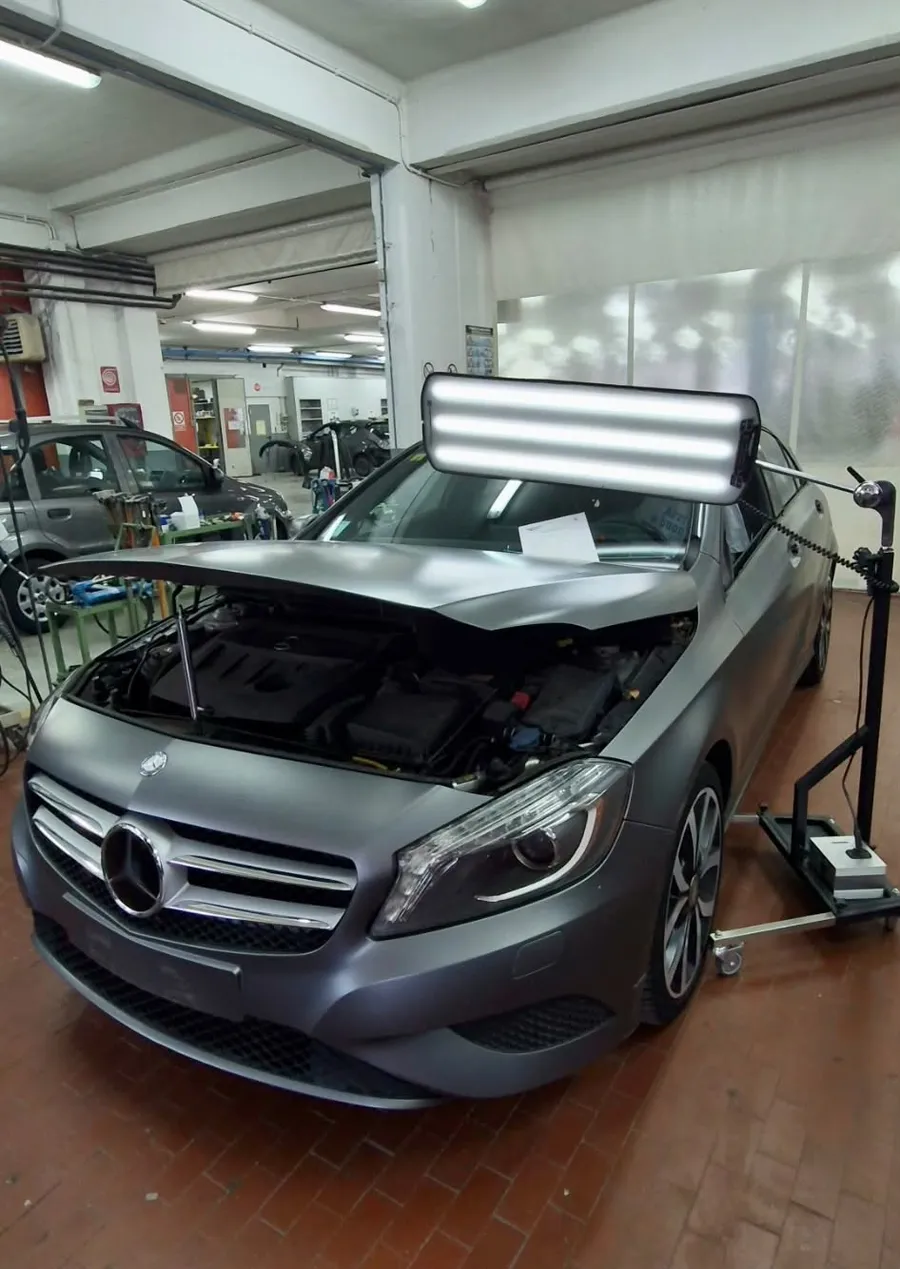
Before even touching the panel, we analyze the dent. We use special LED lamps (line boards) that project parallel lines or gradients onto the bodywork. The distortion of the reflection lets us read the exact topography and depth of the damage, guiding every move with millimetric precision.
02
Technique 02
Panel massaging
Pushing / Massaging
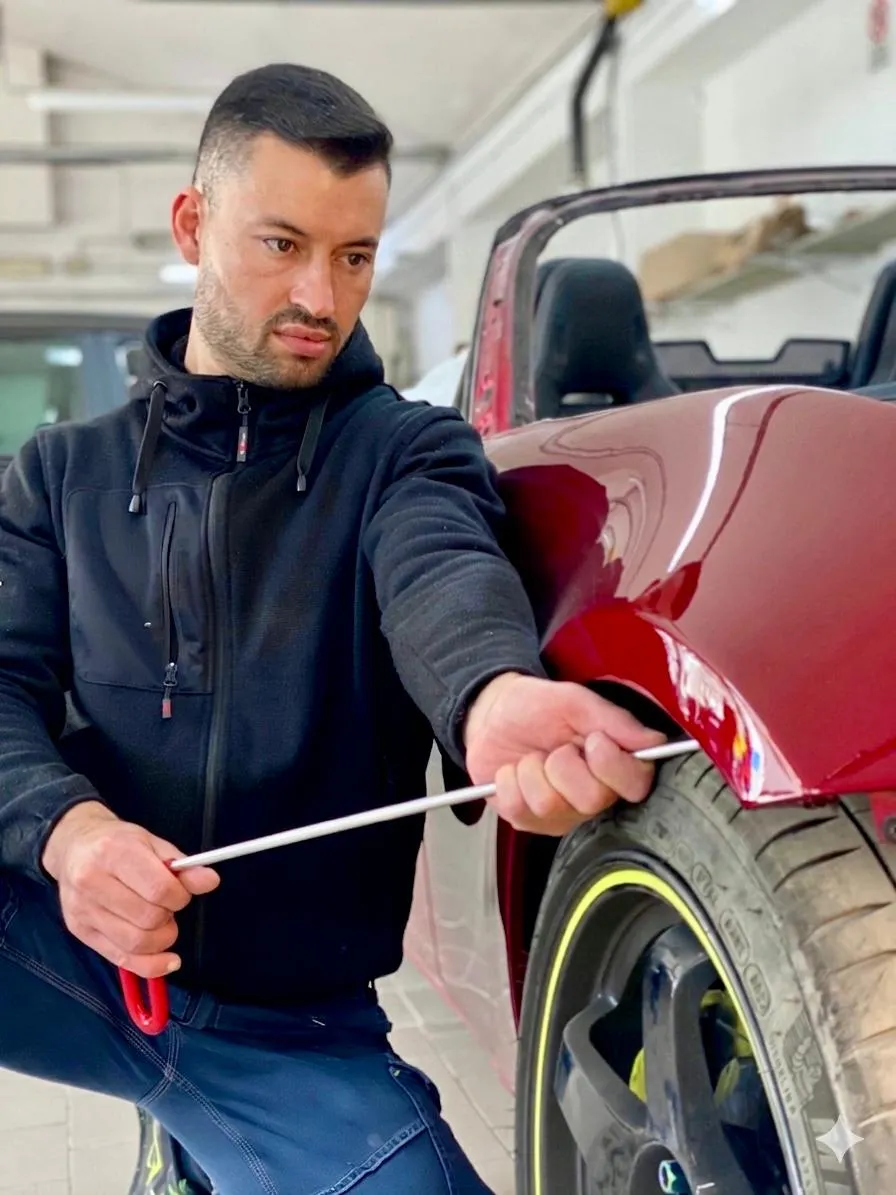
This is the most common PDR technique. Using high-precision steel rods (rods) of various shapes and lengths, we reach the back of the damaged panel (through the windows, drain holes or by removing interior trims). With a series of calibrated pushes from the inside out, the metal is gently "massaged" outward until it regains its perfect original flatness.
03
Technique 03
Glue pulling
Glue Pulling
When rear access is blocked (for example on roof pillars or double-layer panels), we work from the outside. A special plastic tab (tabs) is glued to the center of the dent with a hot glue made for bodywork. Once anchored, we pull the tab outward with a mini lifter (lifter) or a slide hammer (slide hammer). At the end, the glue is gently released, leaving the paint intact and without any residue.
04
Technique 04
Tapping down and blending
Tapping Down / Blending
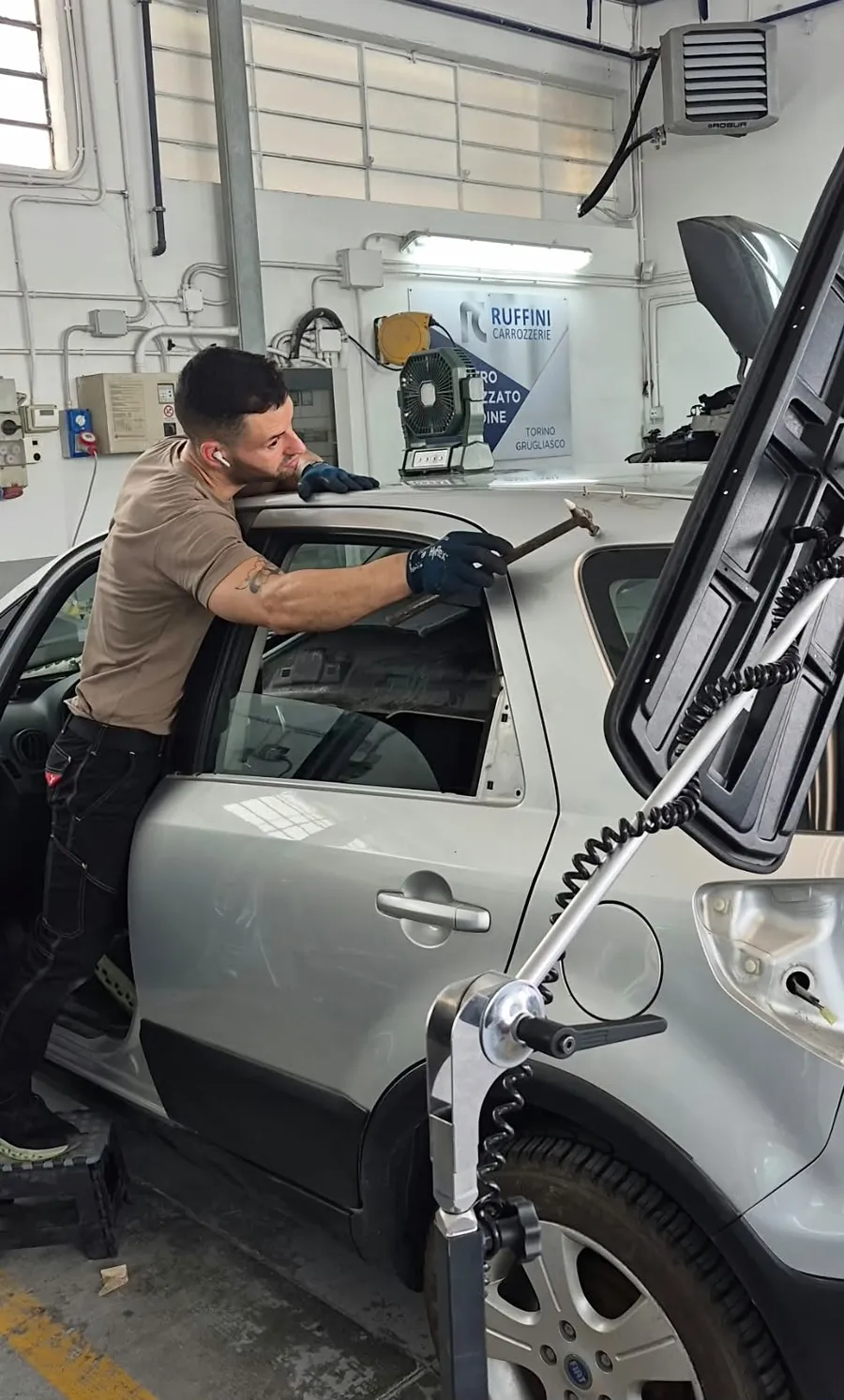
While pulling or pushing, it is normal for the metal to build up tension or form tiny "highs" (spots where the panel has risen too much). To level the surface we use special hammers – often carbon or aluminum – and punches (tap downs) in Teflon or hard plastic. This technique releases the tension in the metal and levels the surface, making the repair invisible.
05
Technique 05
Heat management
Heat Management
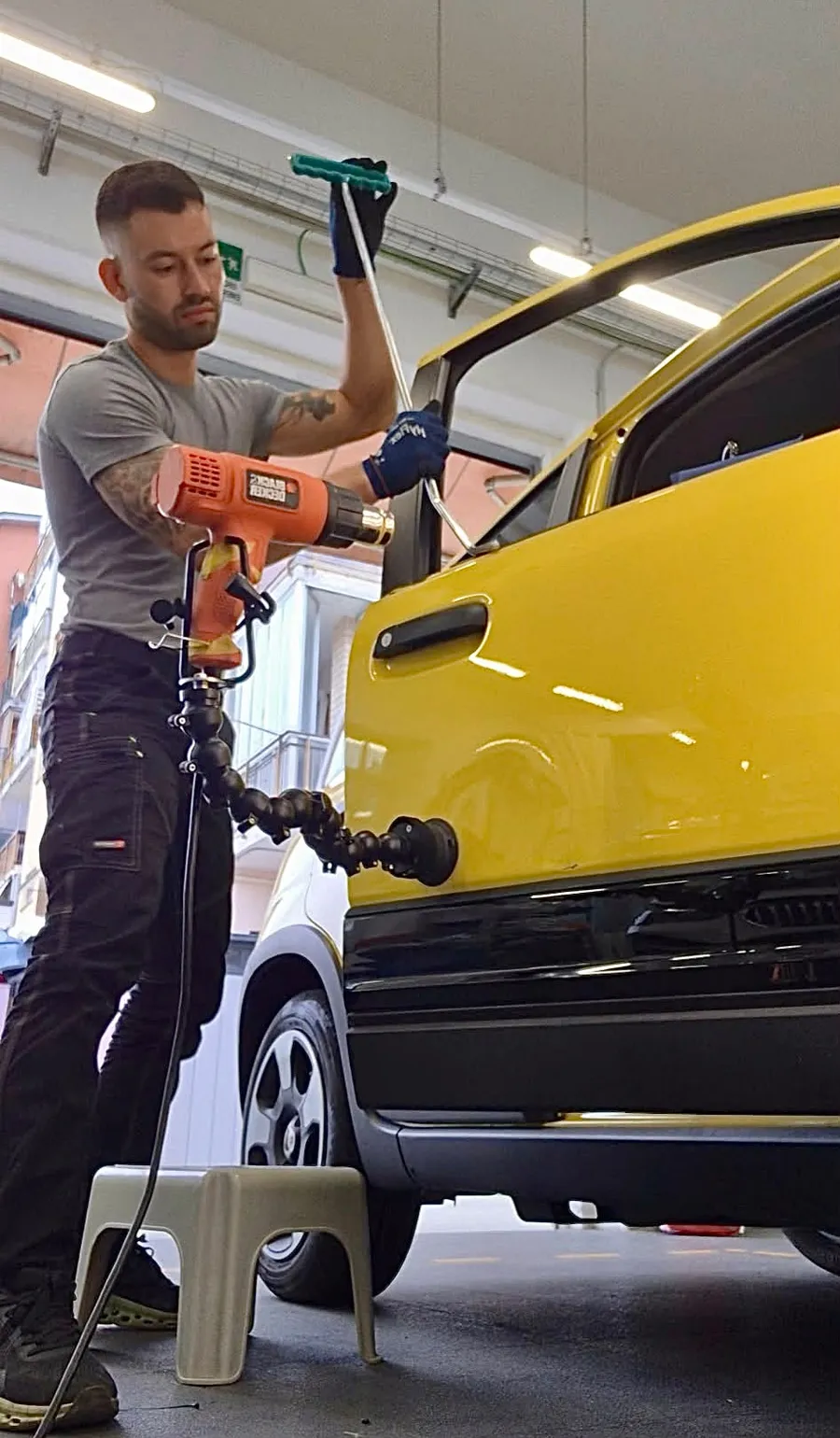
For deep dents, and to preserve 100% of the original paint’s integrity, we use controlled heat. By gently warming the panel with heat guns, we make the paint and metal more elastic and malleable, eliminating the risk of micro-cracks during the repair.
06
Technique 06
Lateral tension
Lateral Tension Tools
For the most extensive damage (smash), where the panel is pulled hard inward, we use lateral tension tools. With glue plates or dedicated jacks, we physically "stretch" the panel along the surface of the car. This lets the heart of the dent relax and return naturally to its original position.